

In the booklet of this recording, the musicologist Nicolas Southon let his stunning ignorance run wild as follows.
Did the composer originally intend to perform it himself or did he write it specifically for Miss Jeunehomme? It was certainly she who gave the work its first performance when she was in Salzburg at the end of January 1777. Little is known about this French pianist referred to in Mozart family correspondence as Jenomy or Jénomé. She came from Paris and, as such, probably embodied the broader horizons for which the composer was yearning.

Victoire Jenamy's death certificate – she died on 5 September 1812 – issued by the City of Clermont-Ferrand for Joseph Jenamy who in 1813 wanted to marry again (A-Wstm, SP, VKA 11/1813). The deceased, who around 1776 had left her husband, had taken her maiden name again.

The transcription of Victoire Jenamy's death certificate (with thanks to Ian Allan)
I recently had a little discussion with the embarrassingly cocky deputy editor of the BBC Music Magazine Jeremy Pound who told me that "my work might enjoy a wider audience, if I made a greater effort to publish and disseminate it properly" – the word "properly" of course referring to publications in print which (at least in the world of some bemused journalists) will always be taken into consideration by other scholars, and eventually, by the public. But of course, this is not how things work in the real world where people cannot be made to read scholarly articles and accept scientifically proven facts as the truth. The continuing "Jeunehomme" nonsense, spread by ignorant musicologists and the recording industry, is a case in point. In 2010, one clueless producer even went so far as to tweak the fantasy name "Jeunehomme" into something entirely new.

My identification of the French pianist Victoire Jenamy (1749–1812) as dedicatee of Mozart's piano concerto K. 271 was published and disseminated (properly) as follows:
- Lorenz, Michael. "Altes Mozart-Rätsel gelöst". In Österreichische Musikzeitschrift, 3-4/2004, 78.
- Van Gelder, Lawrence. "Mozart by Its Rightful Name". The New York Times, 15 March 2004.
- Lorenz, Michael. Program note for Robert Levin's and Roger Norrington's concert with the RSO Stuttgart on 18 March 2004 at the Wiener Konzerthaus.
- Lorenz, Michael. An online publication of an English translation of this program note (March 2004).
- Lorenz, Michael. "The Jenamy Concerto". In Newsletter of the American Mozart Society, vol. IX (January 2005), 1-3.
- Lorenz, Michael. "»Mademoiselle Jeunehomme«. Zur Lösung eines Mozart-Rätsels". Mozart Experiment Aufklärung. Essays for the Mozart Exhibition 2006, (Ostfildern: Hatje Cantz Verlag, Da Ponte-Institut 2006), 423-29.
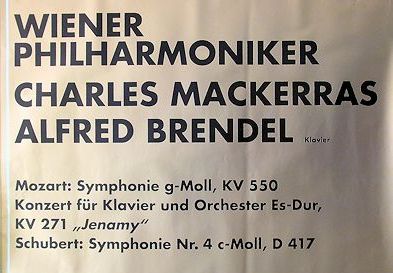
- Lorenz, Michael. "Wolfgang Amadé Mozart. Klavierkonzert Es-Dur KV 271 »Jenamy«. Program note for Alfred Brendel's final concert (with the VPO conducted by Charles Mackerras) at the Vienna Musikverein on 18 December 2008.
- Lorenz, Michael. "Alfred Brendel's Final Program Note" (English translation of the above program note, published online on 26 August 2012).
The name "Jeunehomme concerto" did not originate in a misunderstanding or through "a corruption of a name" (as some ignoramuses claimed). The name is a total fabrication. Most authors, who dealt with this issue in the last decade, either did not read my publications, or simply did not understand this central point. Some Mozart handbooks, which were published in the Mozart Year 2006, included my discovery, some authors included it – for obvious reasons of jealousy – without giving my name (as if the truth had dawned on Mozart scholarship from a magical "collective wisdom"), and some of them ignored it altogether.

The "Jenamy" entry on p. 232 of The Cambridge Mozart Encyclopedia (Cambridge University Press, 2006). The author does not provide a bibliographic source for the information, because he has obviously received his knowledge from a messenger that visited him in a dream.
Some renowned pianists have shown how to proceed honorably on the occasion of a new recording of K. 271. Before Paul Badura-Skoda in 2006 wrote the booklet for his new recording for ARCANA, he asked me to provide him with detailed information concerning my latest research and later sent me a copy of the recording.

In the booklet for her 2011 recording of K. 271, released on the Hyperion label, Angela Hewitt wrote the following.

On the occasion of the publication of his book Über Musik. Sämtliche Essays und Reden in 2005, Alfred Brendel, who of course is far above the pettiness of frustrated scholars, even updated his 1985 essay "Ermahnungen eines Mozartspielers an sich selbst" ("Admonitions of a Mozart performer to himself") to include my discovery. In this essay Brendel writes.
Wer die mysteriöse »Mlle Jeunehomme« war, ist dank der Nachforschungen von Michael Lorenz inzwischen geklärt: Sie hieß Victoire Jenamy, wurde in Straßburg 1749 geboren und war das älteste Kind des Tänzers Jean Georges Noverre. Mysteriös geblieben ist die plötzliche höchste Meisterschaft, die sich in dem für sie komponierten Werk entfaltet.
Thanks to the research of Michael Lorenz the identity of the mysterious »Mlle Jeunehomme« is now clarified: Her name was Victoire Jenamy. She was born in 1749 in Strasbourg and was the eldest child of the dancer Jean Georges Noverre. What remains mysterious however, is the sudden highest mastery that unfolds in the work composed for her.

Very soon, after on 9 May 2003 I had discovered the truth about K. 271 and Madame Jenamy, I decided not to become the "Jenamy police" who would call out all the uninformed musicians and recording producers who refuse to accept the historical facts. After all, I have more important things to do than to pursue this kind of propaganda work. But as time went by, I had to realize that the continuing use of the nonsensical fantasy name "Jeunehomme" is a grave injustice towards the artist who paid Mozart good money for composing one of the greatest masterpieces of classical music. We simply owe it to Victoire Jenamy to give her name together with the concerto that she commissioned.

The seals and signatures on Joseph Jenamy's and Victoire Noverre's 1768 marriage contract (A-Wsa, Merkantil- und Wechselgericht, Fasz. 3, 1. Reihe, J 2). The undersigned persons are: Joseph Jenamy (1747–1819), Victoire Noverre, the merchant and guardian of the groom Leopold Wührer (1712–1776), Noverre's landlord Franz Xaver von Stegnern (1704–1772), the jeweler and brother-in-law of the groom's stepmother Joseph Fleischhäckl (1700–1795), the state official and poet Franz von Heufeld (at that time not yet ennobled), and "comme pere de l’epousée“ Jean Georges Noverre. This document was first published in my article "»Mademoiselle Jeunehomme«. Zur Lösung eines Mozart-Rätsels". In: Mozart Experiment Aufklärung. Essays for the Mozart Exhibition 2006.

The entry concerning Joseph Jenamy's and Victoire Noverre's wedding on 11 September 1768 in St. Stephen's Cathedral (A-Wd, Tom. 64, fol. 206v)
dispensati in tribus
Denunc:[iationibus] et Sp[on]sa etiam
in def[ect]u domicilij
depos:[ito] lib:[ertatis] juram:[ento]
cop:[ulati] sunt 11. Sept:[embris] [1768]
a C[hori]m[a]g[i]stro.
Der Wohl Edle H:[err] Joseph Jenamÿ Bürg:[erlicher] Handels
Man led:[igen] St.[ands] geb: alhier des Hl: Franz Jenamÿ
Bürgl: Handelsmans et Franciscæ Ux:[oris] ehl: H:[err] Sohn
obtinuit veniam ætatis et declarationem fuit majorrenis
ab Aug[ustissi]mo teste Leopoldo Wirer. Cambij Judice
et ejus majore.
Mit der Wohl Edlen J:[ungfer] Victoria Noverre geb:[ürtig]
Von Straßburg. durch 15. Monath allhir des Johan Georg
Noverre K K: Ballet M[ei]st[e]rs Ludovicæ Ux:[oris] ehl:[iche] T:[ochter]
P:P:[arentes] sponsæ ambo adfuerunt in copulatione.
Testes. H:[err] Joseph Fleischhackel K: K: Jubilir
Hl: Baron Xaverius Freÿher V. Stenger[sic]. H:[err]
Franz Heüfeld K: K: Rechnungs officir.
In 1784, the couple filed for a divorce. And, by the way, there is no proof that Victoire Jenamy ever visited Salzburg.
Note to journalists: owing to lack of time and peers, this post was not peer-reviewed.
See also: Alfred Brendel's Final Program Note. Note to plagiarizers who regularly steal my material for their program notes: my text from 2008 is subject to copyright. If you plagiarize it, you should at least give my name, and, in any case, expect legal action to be taken.
© Dr. Michael Lorenz 2014. All rights reserved.
Updated: 26 December 2024
Update (23 February 2019)
Nothing could be further from reality than to assume that in 2019 the reservoire of nonsense has already been exhausted. In a current announcement of a concert by the London Mozart Players on April 11, 2019, entitled "Mozart's Women", we are confronted with the surprising existence of a "French piano virtuoso Victoire Jeunehomme".

The author of this text is the conductor of this concert, Janet Glover who seems to base her expertise on the fact that in 2005 she published a book entitled Mozart's Women. Although this book received favorable reviews from a number of journalists, it is nothing but a flawed and rather lightweight summary of all stories related to women in Mozart's life that have already been published countless times. Although in her book Glover uses the pianist's correct name "Jenamy", she – quite unsurprisingly – fails to give my name. The new name "Victoire Jeunehomme", which Glover has now concocted, is truly bizarre. She uses the name "Victoire" that I discovered, but sticks to the old fictitious "Jeunehomme", just in case this Dr. Lorenz got it wrong after all. Glover's undecidedness leads to even worse nonsense, because the names "Victoire" and "Jeunehomme" cannot be used together. They are mutually exclusive.
Update (January 2025)
In the new Köchel-Verzeichnis, which was presented with delay, but all the greater fanfare in 2024, in the commentary on K. 271 (p. 310), some nonsense concerning the topic was published, along with a wrong first name for Mrs. Jenamy. This disgrace will be discussed in more detail in a future blog post.


